What Is a Smart Building? A Complete Guide for Facility Leaders
Share Article

Smart buildings are revolutionizing the way facilities operate. Through the integration of automation, IoT, and intelligent systems, these facilities dynamically react to the needs of their occupants, enhance performance, and lower energy costs.
For facilities managers, learning the principles of smart buildings and the appropriate building technology solutions is no longer a choice. It has become imperative for the future and effective management of their facilities.
What is a Smart Building?
A smart building utilizes real-time data and automated technology to monitor, control, and optimize various building operations such as temperature, security, and energy consumption. Unlike conventional buildings, which utilize systems that operate independently of each other.
Building systems communicate with each other through standardized protocols such as BACnet, DALI, and Zigbee, which allow building systems to interact with each other seamlessly.
This enables smart buildings to not only react to the actions of occupants and environmental factors, but also to anticipate them. It’s not just about being connected. It’s about utilizing the connection, and the data that comes with it, to produce results for the building.
Core Technologies That Power Smart Buildings
Core Technologies That Power Smart Buildings
At the center of any smart building are the technology platforms that work together to produce the desired results and outcomes for the building.
Building automation systems (BAS) are the foundational technology of smart buildings, operating as the control layer for building systems such as lighting, temperature, and other mechanical systems. Sensors installed throughout the building feed data into the BAS, enabling the building to react to changes in occupancy, weather, and energy consumption.
Power over Ethernet (PoE) infrastructure supports this system by allowing both power and data to be transferred over a single Ethernet cable, simplifying the installation of devices such as LED lighting systems, sensors, and access points.
Smart buildings also use advanced lighting systems, dynamic environmental systems such as automated shades and glazing, and cloud-based analytics systems to process data. These technologies work together to provide better services to a building.
The Benefits of Smart Building Technology
Benefits of Smart Building Technology
Smart building technology has provided various benefits to building owners. One of the most notable is cost savings related to energy consumption. Automated systems turn on lights only when there is activity and run heating and air conditioning only when needed, reducing energy usage without sacrificing comfort.
Equipment monitoring is another area where building owners benefit. Smart buildings have the ability to detect problems with a system before a failure occurs, giving building owners the opportunity to troubleshoot issues before they worsen and cause major disruptions.
See also Creating Smarter & More Energy Efficient Buildings: A Guide to Lighting Controls
Smart building technology also benefits occupants directly. Automated temperature zones provide comfort, and lighting systems adjust based on available natural light. These touches improve the day-to-day experience for everyone in the building.
Moreover, smart building systems provide data that can help meet ESG (Environmental, Social, and Governance) criteria. Energy reports and analytics provided by smart building systems help in measuring and tracking progress toward environmental goals.
How Smart Buildings Come Together
Creating a smart building begins with understanding the current state of infrastructure and desired outcomes. The initial step involves conducting an assessment to identify improvements and create a roadmap for integration. The next step is system design, which involves integrating building automation systems, network architectures, and devices in a manner appropriate to the building’s intended use.
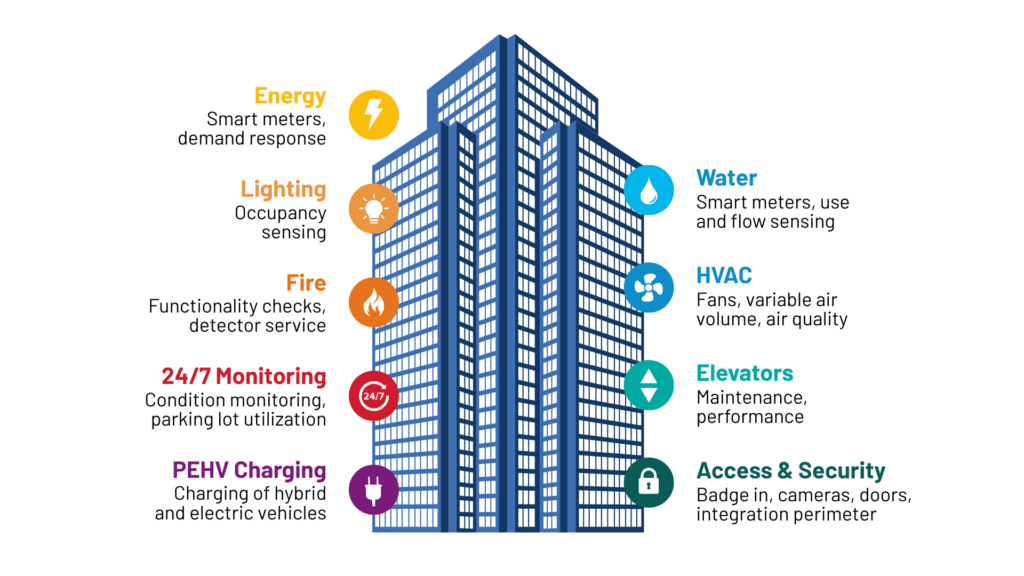
During this phase, new systems are integrated with existing ones where possible. Open standards help avoid compatibility issues and allow room for future expansion. The system is then commissioned to ensure it is working as intended and monitored to keep it in optimal condition.
Scalability is also an important consideration. A smart building can start as a single integrated system such as lighting and HVAC, and evolve over time into a fully unified smart environment.
What to Consider Before Making the Switch
Before becoming a smart building, there are various factors to consider. Integrating legacy systems with new ones can be difficult, and data privacy and security become more complex as more devices are connected to the network.
Budgeting is another important factor. Although smart buildings offer high ROI in the long term, the upfront investment can be significant.
There is also a critical cybersecurity component. With more devices connected to the network, securing building systems is essential. Smart buildings typically employ network segmentation and encrypted communication protocols to protect sensitive data and system access.
Of all the considerations, perhaps the most important is finding the right smart buildings implementation partner, as they play an essential role in the long-term success of your smart building system. It’s important to work with a smart buildings partner who can help you find the right technology and offer quality ongoing support.
Trends Shaping the Future of Smart Buildings
Emerging technologies will continue to influence smart building design. Artificial intelligence is already being utilized to advance predictive maintenance, meaning issues are addressed before they cause system downtime. Cloud-based solutions are also making it simpler to manage multiple locations.
As sustainability becomes more important, smart buildings will have an increased role to play in attaining organizational ESG objectives. Whether cutting emissions or enabling detailed carbon reporting, smart building solutions provide the data and control needed to drive results.
See also Exciting Announcement: Partnership Between FSG Smart Buildings and Distech Controls
Network convergence, where voice, data, security, and power are integrated into one system, is also becoming more popular and offers more opportunities for centralizing building management.
Final Thoughts
Smart buildings are no longer just part of the future. They are already here. For facility managers looking to lower costs, enhance occupant satisfaction, and attain sustainability goals, smart building solutions provide the tools to get there.
With the right planning and assistance, any building can become smarter.
Ready to make your building smarter? Contact FSG today.
Frequently Asked Questions
What is the distinction between a smart building and a building automation system (BAS)?
A BAS is commonly the central control system that helps control and automate different building systems such as HVAC and lighting. A smart building, on the other hand, is the broader ecosystem that uses real-time data, automation, analytics, and connected devices to optimize performance across different building systems. In other words, BAS is often the foundation, but a smart building includes integration, data visibility, and ongoing optimization.
What are the different building systems that are commonly integrated with smart buildings (besides lighting and HVAC)?
Smart buildings commonly integrate access control and security, energy management, and equipment monitoring into a unified platform that enables data sharing across different building systems. These systems communicate and exchange data through standardized communication protocols, helping them work together rather than operating in silos.
What are the different smart building protocols that facility managers should be aware of, and why do they matter?
Protocols such as BACnet, DALI, and Zigbee are significant because they allow different devices and building systems to communicate and integrate more easily. They allow facility managers to select building systems that work together seamlessly, reducing the compatibility challenges that can arise when systems are sourced independently.
Is Power over Ethernet (PoE) significant for smart buildings, or just nice to have?
PoE is significant for smart buildings because it delivers both power and data through a single cable, simplifying installation for connected lighting, sensors, and access points. It also reduces construction complexity and supports centralized management for low-voltage smart building devices.
What are the different factors I should consider before upgrading an existing building to smart building technology?
The biggest considerations are legacy system compatibility, minimizing disruption during retrofits, and addressing cybersecurity and data privacy as more devices are connected to the network. FSG recommends starting with an assessment and roadmap, then designing systems with open standards and scalability in mind.
Authored by Andrew Ghilino
Expert reviewed by Gary Ament, Strategic Partnerships at FSG Smart Buildings, developing innovative strategies and utilizing cutting-edge technologies to optimize building performance and enhance energy efficiency.