Up to 25% of the total amount of energy consumed by a commercial facility is used for lighting, according to ENERGY STAR. In other words, lighting is the largest and most controllable element of the utility bill, and the improvement of its performance will have immediate results.
In commercial LED lighting retrofits, old fluorescent, HID or metal halide lighting systems are replaced by new, energy-efficient LED lamps and fixtures. The result will be reduced energy costs, fewer service calls and improved light quality in your facility. Almost all commercial projects pay off within 2 to 4 years, and many of them qualify for the rebates provided by utilities that shorten this period even further.
This article will explain what commercial lighting retrofits include, what you can realistically save and how commercial electrical contractors, like FSG, perform LED lighting retrofits as a key part of their electrical services.
What Is a Lighting Retrofit?
A lighting retrofit is the replacement of the existing lighting system without the replacement of the entire electrical system. In commercial facilities, this means replacing old fluorescent, HID or metal halide lamps with LED lighting while keeping the existing wiring, conduit and fixture mounts.
However, the scope of such projects varies from installing LED bulbs in place of fluorescent lamps to changing the entire lighting system, including lamps, fixtures and additional lighting control systems like occupancy sensors and programmable schedulers.
There is no single approach for every lighting system and facility because it depends on its age, operating hours and the goals set for this project. However, there is one thing that remains unchanged, the result of every project is improved light, lower costs and reliability.
Advantages of Upgrading to LED
Improved light is beneficial not only in terms of energy savings. Good lighting improves the performance of the employees, increases productivity and reduces mistakes. Poorly lit industrial and manufacturing environments cause fatigue of workers which makes them commit mistakes and lowers their productivity.
When your employees’ eyes aren’t tired and weary from poor lighting, they’re much more aware of their surroundings and less likely to make mistakes. This is a crucial factor to consider in industrial, manufacturing, and other industries involving heavy or complicated equipment.
Moreover, in industrial facilities with heavy equipment, poor light may become the source of serious safety issues and accidents. Improved lighting will help to increase the comfort of your employees and avoid mistakes. An industrial lighting retrofit will save money, but can also improve the safety record in your manufacturing facility.
Customers and visitors also appreciate improved lighting in the building. The facility that is properly illuminated shows that this is a business where everything is well managed and run efficiently.

According to the Journal of Interior Design, lighting is an essential aspect of retail atmospherics, and it plays a direct role in shaping the emotions that guide shoppers’ purchasing behavior, determining whether or not they enter a store.
Recent research done by the University of Pennsylvania analyzed the effect of upgrading the lighting in Philadelphia. After switching from incandescent to LED, the rate of crimes dropped by 15%, and the number of gun and violent crimes decreased by 21%. Such improvements will reduce risks for people visiting your facility.
Source: University of Pennsylvania Crime and Justice Policy Lab, Philadelphia Streetlight Study (2023)
Lighting maintenance and service are also the area where you can significantly decrease your expenses. LED luminaries and fixtures last two to four times longer than the fluorescent lighting system, and they do not require ballasts, which are the most problematic part of the system. Fewer repairs mean fewer service calls and ladder climbing, and fewer service disruptions.
All in all, the benefits of upgrading are not only about light but about improving the efficiency of your facility.
How Much Can You Save on Energy?
There is no question about it in the minds of the experts regarding the use of LED lights. Dr. Greg Keoleian, who serves as a co-director of the Center for Sustainable Systems at the University of Michigan, headed a team that examined over 160 LED replacement choices in regard to lamp replacement, retrofitting and luminaire replacement.
Their findings were clear: It is much better to change your fluorescent lamps with LED lamps rather than replace them with new fluorescent lamps. The conclusion that we have reached is in agreement with the U.S. Department of Energy, which has stated that LED systems are 25 percent more efficient than the fluorescents.
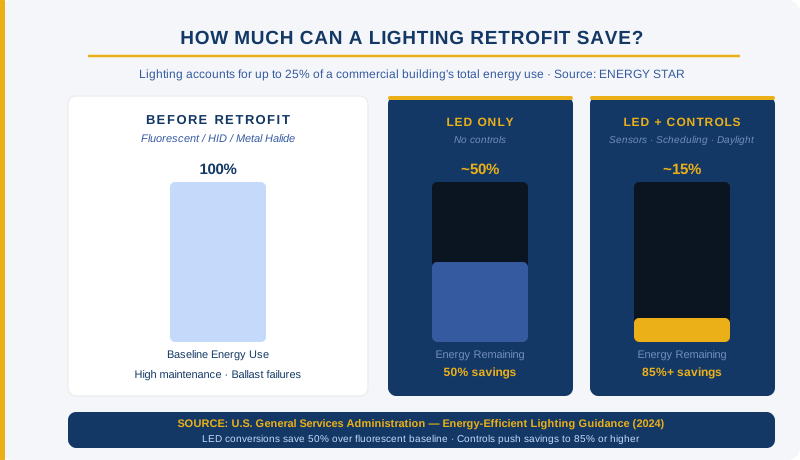
The most quantifiable reason for performing a lighting retrofit is obvious… energy savings. According to the data published by the U.S. General Services Administration, LED conversion saves up to 50% of the electricity compared to the standard fluorescent lights. If we add lighting controls to this project, it is possible to reduce the electricity consumption up to 85%.
Considering that lighting accounts for 25% of the energy consumption in a commercial building, you can decrease this part of utility expenses by 75%, which is almost 19% of the total utility costs.
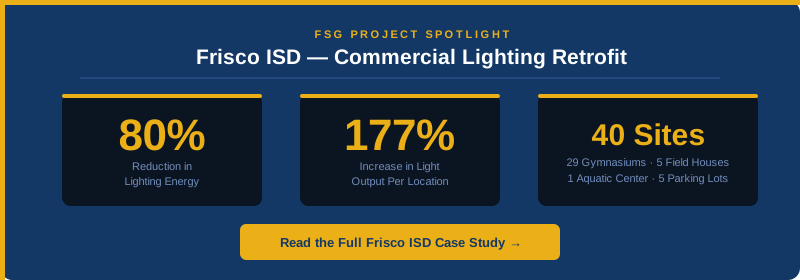
FSG’s work for Frisco ISD is a vivid example of how this kind of project can be performed. At 29 gymnasiums, 5 field houses, one aquatic center and 5 high school parking lots, the district achieved the average savings of 80% in the electricity spent on lighting, and increased the light output by 177%.
Read the Full Frisco ISD Case Study
In most cases, the commercial retrofit projects pay off within 2 to 4 years after their completion. The utility rebates described in the following chapter help to shorten this period significantly. The actual period of payback for every facility depends on the current lighting system, utility rates, operating hours and other factors. The key point is that the payback happens, and your energy expenses continue to be low for the lifetime of the system.
Utility Rebates and Incentives
The upfront costs of a commercial lighting retrofit are real, but in most cases, they are lower than it seems at the first glance. All utilities, state energy agencies and some federal programs provide rebates and incentives that are specifically designed to cover the costs of switching to energy-efficient LED lighting systems.
For large-scale projects, these rebates and incentives may cover a significant part of total project costs. You can research available rebates and incentives in your area using the Database of State Incentives for Renewables & Efficiency®
The facilities that get the most benefits from rebate and incentive programs are those that are aware of such programs before performing a project. Rebate programs differ widely depending on the location of the facility, its utility provider and the scope of the project. Each utility program is funded by the state budget, and the availability and amount of funds may vary each year.
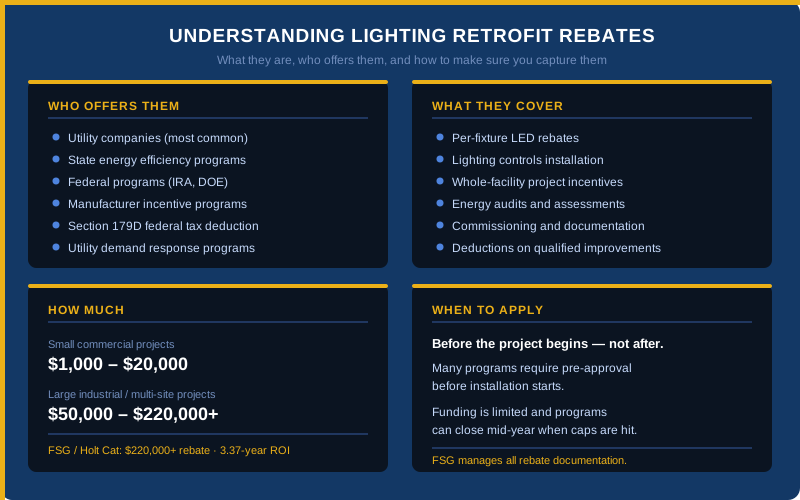
This is one of the benefits of working with a national lighting contractor. Our company works with utility rebate programs in 30+ locations. We identify programs applicable for your project, prepare all necessary documentation and make sure that nothing is missed.
If you estimate the economic feasibility of a lighting retrofit project, then it is better to start negotiations with the utility companies and learn about available incentives at the very beginning of the project.
What to Expect from the Process of Performing a Retrofit?
One of the main concerns of commercial facilities regarding lighting retrofit is associated with the project itself. How much it will disrupt the normal activities of a facility? In general, it can be said that if the retrofit is performed professionally, it does not cause many disruptions to your daily activity.
Every commercial lighting retrofit project starts with a lighting audit. FSG’s team evaluates your current lighting system, measures the light level in your facility, analyses your utility bills and identifies the areas where the highest energy waste takes place. This audit is the basis of the retrofit project for your facility.
Then, FSG performs project management, sources products, prepares the schedule and coordinates the installation of your new lighting system. The installation is performed in the way that does not create conflicts with your operations. For continuous-operation facilities, the installation can be performed in several shifts or weekends.
Lighting controls are often included into the project and installed together with the lighting fixtures. The installation of occupancy sensors, daylight harvesting and programmable schedulers is performed simultaneously with the installation of lighting system that allows capturing the entire efficiency. See how FSG integrates lighting controls into an LED lighting retrofit project.
At the completion of the project, the documentation of your new lighting system is provided by FSG as well as all necessary documents for applying for utility rebate programs.
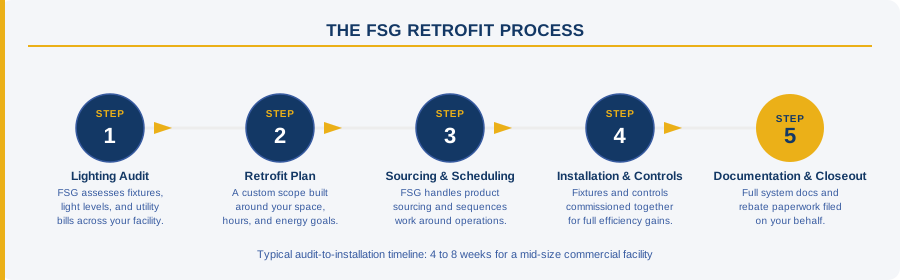
Usually, the process of performing the retrofit project is quicker and causes less disruptions to your operation than expected. The process from the audit to the installation usually lasts 4 to 8 weeks depending on the complexity of the project and lead time of the products.
Is Lighting Retrofit Suitable for Your Facility?
In most cases, if your facility uses fluorescent, HID or metal halide lighting system, then this question can be answered positively. LED lighting systems are so much more efficient and cheaper than old systems that there are practically no obstacles for their installation.
The most frequent concern is the upfront cost of the project, and it is a legitimate concern. But it is important to note that this is an investment in energy-efficient lighting system that provides quick returns, starting from the month when the system starts working. Besides, after applying for utility incentives and rebates, the net cost of the project is lower than its estimated cost.
Old buildings are not an obstacle to performing a retrofit project. Lighting retrofit projects are intended to be performed without replacement of the entire electric system, so the age of the facility is irrelevant. Our company performed lighting retrofit projects for buildings of all ages and configurations.
The concern about disruption caused by the lighting retrofit project is understandable for facilities that run around-the-clock. However, as mentioned above, we coordinate installation in such a way that your operation is not disrupted.
The best time to begin the project is when your old lighting system starts breaking. The reactive maintenance of the old fluorescent system costs significantly, and every month of postponing the renovation is another month of unnecessary expenses.
Ready to See What a Retrofit Would Save Your Facility?
FSG has been performing lighting retrofits for over 40 years. We operate across 30+ locations nationwide and have managed lighting retrofits for facilities of every size and industry.
Contact FSG to schedule a lighting audit.